The short answer
“Regular” cinnamon is usually Cassia — a different tree from Ceylon. Cassia (Cinnamomum cassia and its cousins Saigon and Korintje) is dark, thick, strong and cheap, and it is what fills most US spice jars. Ceylon (Cinnamomum verum, “true cinnamon”) is light, thin, layered, milder and grown mainly in Sri Lanka. The difference that matters most for a daily routine is coumarin: Cassia carries a lot, Ceylon only small amounts. If you want cinnamon every day, choose Ceylon — ideally as a concentrated, DNA-verified extract like CinnaShield.
Walk down any grocery aisle and you will find a dozen jars that say “cinnamon.” Almost none of them tell you which plant is inside. That is not a small detail. “Cinnamon” is a name shared by the dried inner bark of several different trees in the Cinnamomum genus, and the two that matter most — Ceylon and Cassia — differ in appearance, flavor, price and chemistry.
If you have ever added cinnamon to your oatmeal or coffee because you heard it helps with blood sugar and felt nothing, this is probably the first thing nobody explained to you.
Two trees, one word on the label
Ceylon cinnamon (Cinnamomum verum)
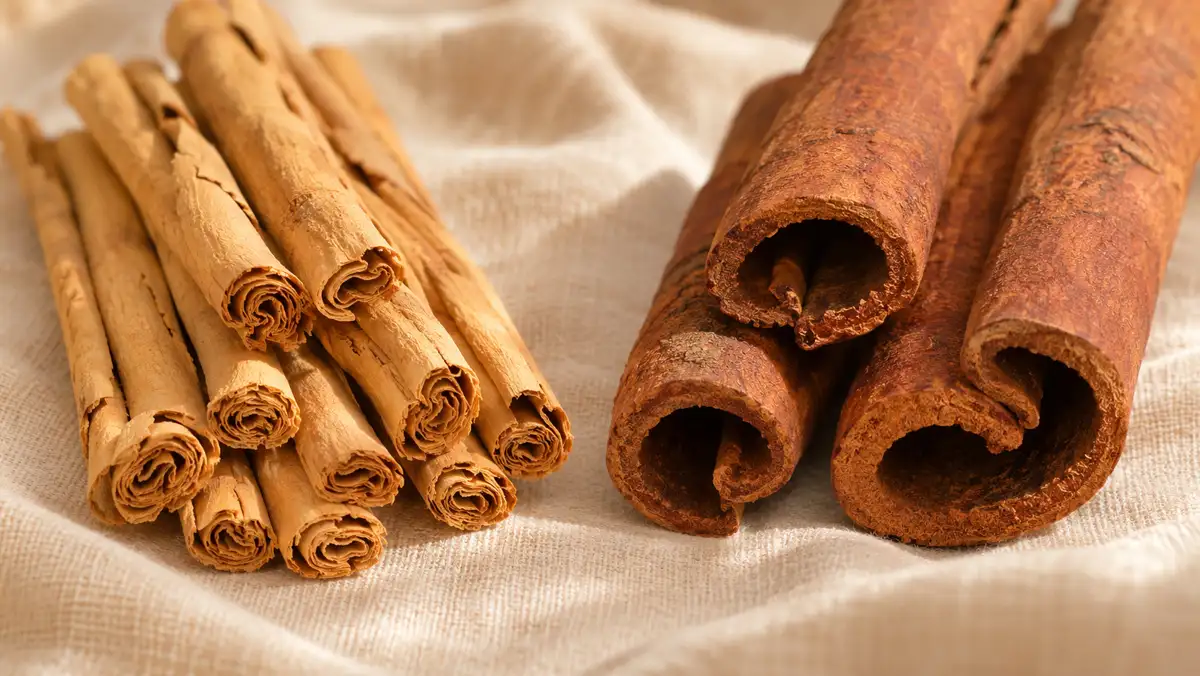
Ceylon is often called “true cinnamon.” It comes mainly from Sri Lanka (the island once called Ceylon), with smaller harvests in places like Madagascar and the Seychelles. Workers shave the thin inner bark by hand and roll it into delicate quills made of many paper-thin layers. The flavor is gentle, sweet and slightly floral. It costs more because it is harder to harvest and produced in smaller quantities.
Cassia cinnamon (Cinnamomum cassia and relatives)
Cassia is the cinnamon most Americans grew up with. The National Institutes of Health describes it as the most common type sold in North America. It includes Chinese cassia plus two popular cousins: Saigon (Vietnamese) and Korintje (Indonesian) cinnamon. The bark is thick and hard, rolls into a single tight curl, and has a bold, spicy-hot taste that holds up well in baking. It is cheap and plentiful, which is exactly why it dominates the shelf.
Side by side: Ceylon vs Cassia
| Cassia (“regular”) | Ceylon (“true”) | |
|---|---|---|
| Botanical name | C. cassia, C. burmannii, C. loureiroi | Cinnamomum verum (C. zeylanicum) |
| Main origin | China, Indonesia, Vietnam | Sri Lanka |
| Stick | Thick, hard, single curl | Thin, papery, many layers |
| Color | Dark reddish-brown | Light tan |
| Flavor | Strong, spicy, hot | Mild, sweet, delicate |
| Coumarin | High | Only small amounts |
| Price | Cheap | Higher |
| Best for | Occasional baking | Daily use |
The coumarin question (and why it matters for daily use)
Coumarin is a natural fragrant compound found in several plants. In small amounts it is no concern. In large, regular amounts it can stress the liver in sensitive people — which is why European food-safety regulators set a tolerable daily intake of 0.1 mg of coumarin per kilogram of body weight back in 2004.
Here is where the species matters. Cassia contains far more coumarin than Ceylon. Germany's Federal Institute for Risk Assessment (BfR) has pointed out that people who eat a lot of Cassia — especially lighter adults and children — can reach that limit surprisingly quickly, and it explicitly advises anyone who uses cinnamon regularly to choose Ceylon, which contains only small amounts.
Now think about what “regularly” looks like for someone who has been stirring a heaping spoon of supermarket cinnamon into their coffee every morning for years, or swallowing a Cassia capsule twice a day, in the belief that it was the healthy thing to do. That is the habit Ceylon was made to replace. For the numbers on daily amounts, see how much Ceylon cinnamon is safe per day.
How to tell them apart at home
- Look at a stick from the endCeylon looks like a rolled cigar of many thin sheets. Cassia looks like one thick sheet curled into a tube, often hollow in the middle.
- Try to snap itCeylon crumbles and breaks easily in your fingers. Cassia is hard and woody — you would need a grinder to break it down.
- Check the colorCeylon is a soft tan. Cassia is a deeper reddish-brown.
- Read the label carefullyWith ground cinnamon you cannot tell by eye. Look for “Ceylon” or “Cinnamomum verum.” If it only says “cinnamon,” “Saigon” or “Korintje,” it is Cassia.
The problem with capsules is that the powder inside is already ground, and many cinnamon supplements never state the species at all. That is why the best Ceylon products go one step further and DNA-test the raw bark — the only way to be sure what you are actually swallowing. We cover the full checklist in how to choose the best Ceylon cinnamon capsules.
Which cinnamon should you choose?
- For an occasional cinnamon roll: any cinnamon is fine. Enjoy it.
- For a daily habit aimed at healthy blood sugar levels and steady energy: Ceylon, every time. You get the cinnamon you are looking for without the coumarin load of Cassia.
- For a meaningful daily amount: a concentrated Ceylon extract. A sprinkle of powder is a seasoning; an extract is a supplement. Read more about the health benefits of Ceylon cinnamon.
Our recommendation: CinnaShield
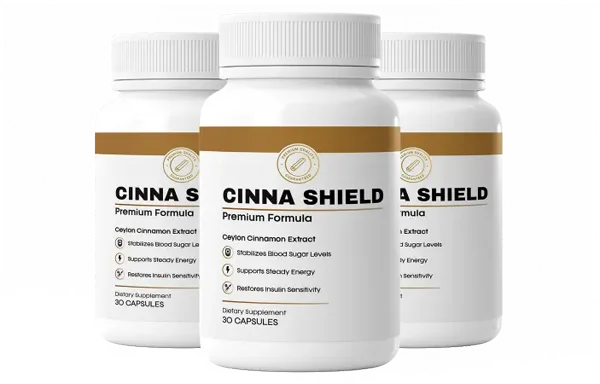
If you have been taking “regular” cinnamon and want to switch to the right species at a real dose, CinnaShield is the option we recommend. It is built on exactly the points in this article:
- Ceylon only, proven. DNA-verified Cinnamomum verum from Sri Lanka — no Cassia, no guessing.
- A real amount. A 12:1 extract: one capsule equals 7,200 mg of Ceylon bark, carried in MCT oil.
- Made for daily use. One capsule a day with water, for healthy blood sugar levels, steady energy and insulin sensitivity*.
- Risk-free. From $33 a bottle on the 3-bottle kit, free shipping and a 90-day money-back guarantee — even on empty bottles.
Frequently asked questions
Is regular cinnamon the same as Ceylon cinnamon?
No. What most stores sell as regular cinnamon is usually Cassia (Cinnamomum cassia and related species), which the National Institutes of Health describes as the most common type sold in North America. Ceylon (Cinnamomum verum) is a different species, grown mainly in Sri Lanka, with a milder flavor, a thinner layered bark and much less coumarin.
Which cinnamon is better for blood sugar, Ceylon or Cassia?
Both species have been studied, but for a daily routine Ceylon is the better choice because it contains only small amounts of coumarin, while Cassia contains much more — which is why Germany's Federal Institute for Risk Assessment advises people who use cinnamon regularly to choose Ceylon. A concentrated Ceylon extract such as CinnaShield lets you take a meaningful amount every day without the coumarin load of Cassia.
How can I tell if my cinnamon is Ceylon?
With sticks, look at the quill: Ceylon is light tan, thin and rolled in many paper-like layers that crumble easily, while Cassia is darker reddish-brown, thick, hard and rolled in a single layer. With powder you cannot tell by eye, so check the label for the words Ceylon or Cinnamomum verum. If it only says cinnamon, assume it is Cassia.
Is Saigon or Korintje cinnamon Ceylon?
No. Saigon (Vietnamese) cinnamon and Korintje (Indonesian) cinnamon are both types of Cassia, not Ceylon. They are prized for strong flavor in baking but carry the higher coumarin levels typical of Cassia.
Why is Ceylon cinnamon more expensive?
Ceylon bark is peeled by hand in thin inner layers and rolled into delicate quills, mostly in Sri Lanka, and the trees yield less. Cassia is thicker, faster to harvest and grown at large scale, so it is far cheaper — which is exactly why it fills most supermarket jars.
The bottom line
“Regular” cinnamon and Ceylon cinnamon are not the same thing. Cassia is fine for the occasional bake, but if cinnamon is going to be a daily habit, the species matters — and Ceylon is the one to choose. Pick a product that names the species, proves it, and gives you a real amount in one simple step.
This article is general information, not medical advice. *Supplement statements have not been evaluated by the FDA. Talk to your doctor before starting any supplement, especially if you are pregnant or nursing, take medication (including any medication for blood sugar) or have a medical condition. Sources: National Center for Complementary and Integrative Health (cinnamon fact sheet); European Food Safety Authority (coumarin TDI, 2004); German Federal Institute for Risk Assessment (BfR) consumer advice on cinnamon and coumarin.