The short answer
There is no official “recommended daily amount” of cinnamon. The number that sets the practical limit is coumarin: European regulators allow a tolerable daily intake of 0.1 mg per kilogram of body weight — about 6 mg a day for a 60 kg (132 lb) adult. Cassia is high in coumarin, so a daily spoonful can use up that allowance fast. Ceylon contains only small amounts, which gives you far more headroom for an everyday routine. With a supplement, simply follow the label: CinnaShield is one capsule a day (7,200 mg of Ceylon bark equivalent) — don’t exceed it.
“How much Ceylon cinnamon per day” is one of the fastest-rising cinnamon questions in the US, and it makes sense. More people are switching to Ceylon for daily blood sugar support, and the next thought is naturally: how much is right, and how much is too much?
The answers online are all over the place — half a teaspoon, two teaspoons, six grams, “as much as you like.” This guide cuts through it with the logic regulators actually use, so you can make a confident choice.
Is there an official recommended daily amount?
No. Cinnamon is a spice, not a vitamin or mineral, so there is no official Recommended Dietary Allowance (RDA) for it. Nobody “needs” a set number of grams per day the way you need vitamin C.
What does exist is a safety benchmark for one natural compound inside cinnamon: coumarin. That benchmark, not a dosing target, is what tells you how much cinnamon makes sense as a daily habit — and it is where the difference between Ceylon and Cassia becomes decisive.
The number that matters: the coumarin limit
Coumarin is a fragrant compound found in several plants. In small amounts it is no concern. In large, regular amounts it can stress the liver in sensitive people. In 2004 the European Food Safety Authority (EFSA) set a tolerable daily intake (TDI) of 0.1 mg of coumarin per kilogram of body weight — the amount a person can take in every day over a lifetime without appreciable risk.
The math is simple: multiply your weight in kilograms by 0.1.
| Body weight | Coumarin TDI per day |
|---|---|
| 50 kg (about 110 lb) | 5 mg |
| 60 kg (about 132 lb) | 6 mg |
| 70 kg (about 154 lb) | 7 mg |
| 80 kg (about 176 lb) | 8 mg |
| 90 kg (about 198 lb) | 9 mg |
That allowance covers coumarin from all sources in your day, not just cinnamon. So the question “how much cinnamon per day?” really becomes: how much coumarin comes with the cinnamon you choose?
Why Ceylon gives you far more headroom than Cassia
Here is where the species changes everything. Germany’s Federal Institute for Risk Assessment (BfR) explains that Cassia cinnamon is high in coumarin, while Ceylon contains only small amounts. The BfR has also pointed out that people who eat a lot of Cassia — especially lighter adults and children — can reach the tolerable daily intake surprisingly quickly. Its advice is direct: if you use cinnamon regularly, choose Ceylon.
And remember: the National Institutes of Health notes that Cassia is the most common cinnamon sold in North America. If your jar simply says “cinnamon,” “Saigon” or “Korintje,” it is almost certainly Cassia. That is why so many people who stir a heaping spoonful into their coffee every morning are better served by switching. Not sure what is in your pantry? Our guide to Ceylon vs regular cinnamon shows you how to tell.
How much Ceylon powder do people use per day?
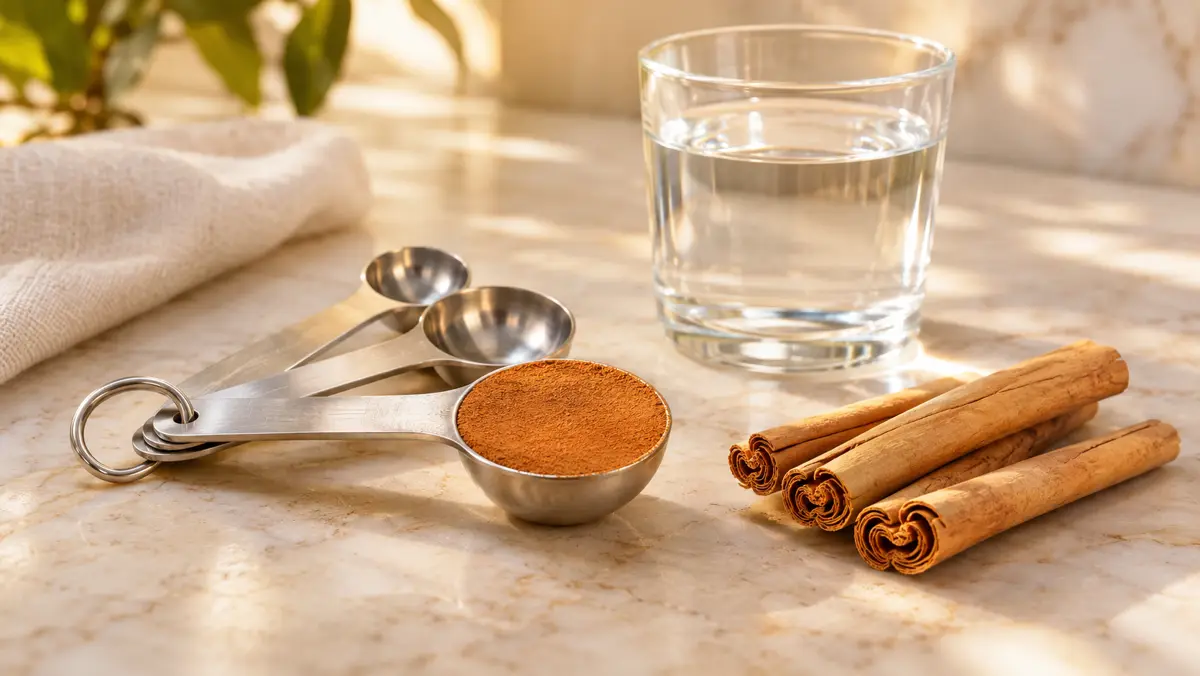
In the kitchen, most people use Ceylon in everyday culinary amounts — a sprinkle on oatmeal, a dash in coffee, up to about a teaspoon across the day. For reference, a teaspoon of ground cinnamon weighs roughly 2 to 3 grams, depending on how finely it is ground and how heaping the spoon is.
Because Ceylon carries only small amounts of coumarin, those household amounts fit comfortably into a daily routine for most healthy adults. The same teaspoon of Cassia, every day, is a different story — which is the whole reason the BfR steers regular users toward Ceylon.
Why measuring powder every day is a hassle
Even with the right species, a daily powder habit has real practical problems:
- No two spoons are the same. Level or heaping, fine or coarse — the amount drifts every morning.
- It doesn’t mix. Cinnamon clumps in coffee, floats on water and sinks to the bottom of the mug.
- You can’t verify the species. Once bark is ground, nobody can tell Ceylon from Cassia by eye.
- It is easy to skip. A routine that needs a spoon, a mug and a minute is the first one to go on a busy day.
- The taste wears thin. A daily teaspoon of dry powder is a lot of cinnamon to swallow.
Trends like cinnamon water try to solve this, but the amount still depends on how long you steep the sticks. We look at that ritual in cinnamon water for blood sugar.
How much Ceylon cinnamon in a supplement? Follow the label
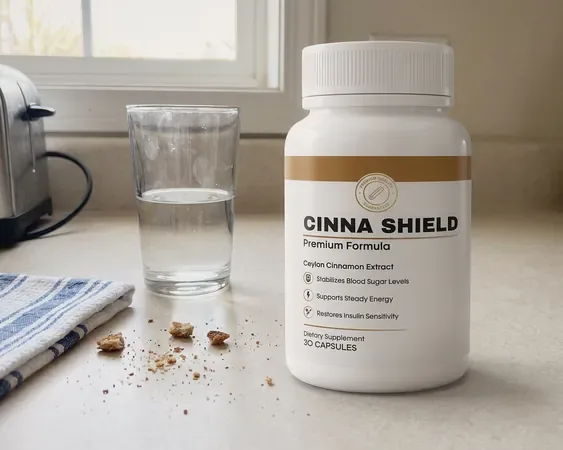
With a supplement, the answer is the simplest of all: take the amount on the label and don’t exceed it. Capsule strength varies enormously from brand to brand — some hold plain ground bark, others a concentrated extract — so a number from one product never transfers to another.
CinnaShield is one capsule a day, with a glass of water next to a meal. Each capsule is a 12:1 extract of DNA-verified Ceylon bark, equal to 7,200 mg of raw bark, carried in MCT oil.
That is the elegant part. You get a meaningful daily amount of true Ceylon in a single step, with no Cassia, no spoon and no guesswork about the species. If you are comparing brands, use our checklist for the best Ceylon cinnamon capsules, and see why the oil carrier matters in Ceylon cinnamon with MCT oil.
Cassia powder vs Ceylon powder vs CinnaShield
| Cassia powder | Ceylon powder | CinnaShield | |
|---|---|---|---|
| Coumarin | High — can reach the daily limit quickly | Only small amounts | Ceylon only, no Cassia |
| Species certainty | Often unlabeled | Only if labeled Ceylon | DNA-verified Cinnamomum verum |
| Daily amount | Varies with every spoon | Varies with every spoon | 7,200 mg bark equivalent, every day |
| Measuring | Spoon, mix, clumps | Spoon, mix, clumps | Nothing to measure |
| Daily routine | Not advised for regular heavy use | Good, but a hassle | One capsule with water |
How to take Ceylon cinnamon every day, the smart way
- Start with the right speciesChoose products labeled “Ceylon” or “Cinnamomum verum” — ideally DNA-verified.
- Pick one sourceIf you take a cinnamon supplement, keep kitchen cinnamon to an ordinary sprinkle rather than stacking spoonfuls on top.
- Follow the labelWith CinnaShield that means one capsule a day. More is not better — don’t exceed the label.
- Take it with a mealPair it with breakfast or lunch and a full glass of water. It is easier on the stomach and easier to remember.
- Stay consistentThe benefits of cinnamon come from daily use over weeks. Learn more in the health benefits of Ceylon cinnamon.
Who should check with a doctor first?
For most healthy adults, Ceylon is the cinnamon suited to daily use. As with any supplement, a few groups should talk to their doctor before starting. The NIH’s National Center for Complementary and Integrative Health notes that the most common side effect of cinnamon supplements is mild digestive upset (allergic reactions are rare), that cinnamon may interact with some medicines, and that large amounts of Ceylon during pregnancy are considered unsafe. So it is standard good practice to check with your doctor if you are pregnant or nursing, take medication — especially for blood sugar — or have a liver or other medical condition. Cinnamon supplements are not intended for children.
Comparing natural options for your routine? See how two popular choices differ in berberine vs Ceylon cinnamon.
Our recommendation: CinnaShield
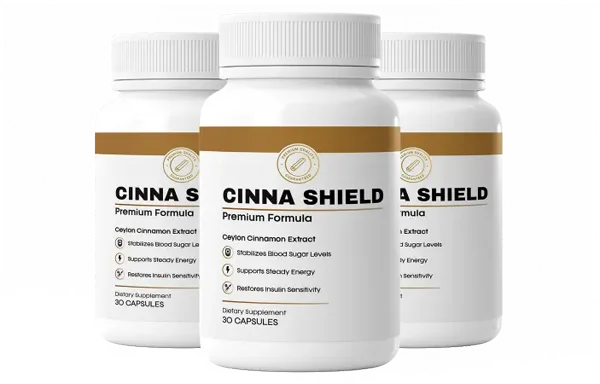
If you want a daily amount of Ceylon cinnamon you never have to measure or second-guess, CinnaShield is the option we recommend. It answers the “how much?” question for you:
- One clear daily amount. One capsule a day — a 12:1 extract equal to 7,200 mg of Ceylon bark, carried in MCT oil.
- The low-coumarin species, proven. DNA-verified Cinnamomum verum from Sri Lanka — no Cassia.
- Made for your goals. Taken with water next to a meal, for healthy blood sugar levels, steady energy and insulin sensitivity*.
- Quality you can trust. Made in an FDA-registered, GMP-certified facility; GMO-free.
- Risk-free. 1 bottle $79, 2 bottles $89 or 3 bottles $99 ($33 each, plus 3 exclusive bonuses), free shipping and a 90-day money-back guarantee — even on empty bottles.
Frequently asked questions
How much Ceylon cinnamon per day is safe?
There is no official recommended daily amount of cinnamon. The practical limit comes from coumarin: the European Food Safety Authority set a tolerable daily intake of 0.1 mg of coumarin per kilogram of body weight, about 6 mg a day for a 60 kg adult. Ceylon contains only small amounts of coumarin, so it gives far more headroom than Cassia for daily use. With a supplement, follow the label; CinnaShield is one capsule a day.
Is a teaspoon of Ceylon cinnamon a day too much?
A teaspoon of ground cinnamon weighs roughly 2 to 3 grams. Because Ceylon contains only small amounts of coumarin, Germany's Federal Institute for Risk Assessment recommends it for people who use cinnamon regularly. The bigger concern is a daily teaspoon of Cassia, which is much higher in coumarin. If you have a medical condition or take medication, ask your doctor what amount suits you.
How many Ceylon cinnamon capsules should I take a day?
Follow the label of the product you use, because capsule strength varies a lot between brands. CinnaShield is taken as one capsule a day with a glass of water next to a meal; each capsule is a 12:1 extract equal to 7,200 mg of Ceylon bark. Do not exceed the label.
Can you take Ceylon cinnamon every day?
Yes, for most healthy adults Ceylon is the cinnamon suited to daily use, precisely because it contains only small amounts of coumarin. That is why regulators advise regular cinnamon users to choose Ceylon over Cassia.
What is the best time of day to take Ceylon cinnamon?
Take it with a meal you eat every day, such as breakfast or lunch, so the habit sticks. Taking it next to a meal with a full glass of water is also gentler on the stomach.
Who should not take Ceylon cinnamon daily?
Cinnamon supplements are not meant for children, pregnant or nursing women or anyone allergic to cinnamon; the NIH notes that large amounts of Ceylon during pregnancy are considered unsafe. Cinnamon may interact with some medicines, so if you take medication, especially for blood sugar, or have a liver or other medical condition, talk to your doctor first.
The bottom line
There is no official daily dose of cinnamon, but there is a clear rule of thumb: keep coumarin within the tolerable daily intake of 0.1 mg per kilogram of body weight. Cassia makes that hard to do every day; Ceylon, with only small amounts of coumarin, makes it easy. For kitchen use, everyday culinary amounts of Ceylon fit a healthy routine. For a consistent, meaningful amount without the spoon, choose a DNA-verified Ceylon extract and follow its label — with CinnaShield, that is simply one capsule a day. New here? Start at our CinnaShield Health home page.
This article is general information, not medical advice. *Supplement statements have not been evaluated by the FDA. Talk to your doctor before starting any supplement, especially if you are pregnant or nursing, take medication (including any medication for blood sugar) or have a medical condition. Sources: European Food Safety Authority (coumarin TDI, 2004); German Federal Institute for Risk Assessment (BfR) consumer advice on cinnamon and coumarin; National Center for Complementary and Integrative Health (cinnamon fact sheet).