
The short answer
Cinnamon water is a pleasant ritual with a real grain of truth — but it is a hard way to get your daily cinnamon. A warm mug of water infused with a cinnamon stick is hydrating, sugar-free and a nice swap for soda or sweet coffee, and cinnamon itself has been researched for blood sugar support. The trouble starts when you try to make it a daily habit: most sticks and powders in the supermarket are Cassia, which is high in coumarin; you never know how much cinnamon actually ends up in the glass; powder sinks; and the prep has to happen every single morning. If you want the cinnamon without the guesswork, one capsule a day of concentrated, DNA-verified Ceylon — like CinnaShield — is the easier way.
Scroll any wellness feed and you will meet the cinnamon water morning: a sunlit kitchen, a glass mug, a curl of cinnamon bark in steaming water, a slice of lemon. The caption promises a calmer morning, fewer cravings and better blood sugar — all from a spice you already own.
We like this trend more than most: it is gentle, cheap to try and nudges people toward water instead of sugary drinks. But a ritual that looks effortless in a 20-second video looks different on day 23, when you are out of sticks and running late. Here is the honest version.
Why cinnamon water caught on (and the grain of truth)
There are good reasons people stick with cinnamon water for a while, and they deserve credit:
- It is warm hydration. Many of us start the day mildly dehydrated. A mug of warm water is a soothing way to fix that before coffee.
- It replaces something sweeter. Swapping a soda, a sweetened latte or juice for an unsweetened cinnamon drink is a genuinely helpful change for anyone watching their blood sugar.
- Cinnamon really has been studied. Scientists at the U.S. Department of Agriculture's Agricultural Research Service, led by Richard A. Anderson, isolated water-soluble polyphenol polymers from cinnamon bark that showed insulin-like activity in laboratory assays (published in the Journal of Agricultural and Food Chemistry in 2004). The fact that these compounds are water-soluble is a big part of why “just steep it in water” sounds so logical.
So the idea is not silly. The gap is between a promising lab finding and a mug of hot water made by eye in a busy kitchen. For a broader look at what the research says, see our guide to the health benefits of Ceylon cinnamon.
How to make cinnamon water
If you want to try it, here is the classic stick method done properly. It makes one large mug or two small ones.
- Pick the right cinnamonUse a stick labeled “Ceylon” or “Cinnamomum verum.” Thin, light-tan, papery layers are a good sign. Thick, dark, single-curl sticks are usually Cassia.
- Boil the waterBring one to two cups (about 250–500 ml) of fresh water to a boil.
- Add the stick and waitDrop in one stick, then either simmer gently or turn off the heat and let it steep, covered, for about 10–15 minutes. The water turns a pale amber.
- Remove the stick and coolTake the stick out (or strain), and let the water cool to a comfortable sipping temperature.
- Drink it warmMost people have it first thing in the morning or alongside a meal.
The powder shortcut
Short on time, many people stir about half a teaspoon of ground cinnamon into hot water. It works as a drink, but cinnamon powder does not dissolve: it floats, clumps, then settles at the bottom as a gritty sludge. Most of it ends up in the last sip, or left behind in the mug.
Popular variations
- Lemon: a squeeze of fresh lemon adds brightness and makes the drink feel more refreshing.
- Ginger: a few thin slices of fresh ginger simmered with the stick give a warming, spicy note.
- Apple cider vinegar: a small splash, well diluted, is a common add-on in the viral versions. It is acidic, so many people sip it through a straw to spare their teeth.
- Honey: the most popular addition — and worth a second thought. Honey is still sugar, so if healthy blood sugar levels are your reason for drinking cinnamon water, it works against the goal.
Cinnamon water benefits: what is realistic
A mug of unsweetened cinnamon water gives you hydration, warmth, almost no calories and a better habit than a sugary drink. Those are real benefits.
What a homemade infusion cannot give you is a known, repeatable amount of cinnamon. And it is never a substitute for medication, a care plan or the advice of your doctor. Think of cinnamon water as a nice drink that contains some cinnamon — not as a measured daily dose.
Why the cinnamon water trick is hard to keep up
This is where most people quietly drift away from the ritual — not because they are lazy, but because the recipe has built-in problems:
- It is probably Cassia. The National Institutes of Health notes that Cassia is the most common cinnamon sold in North America, and most sticks and jars do not say which species is inside. Cassia carries far more coumarin than Ceylon. European food-safety regulators set a tolerable daily intake of 0.1 mg of coumarin per kilogram of body weight, and Germany's Federal Institute for Risk Assessment advises regular cinnamon users to choose Ceylon. A daily mug from the supermarket jar is exactly the kind of “regular use” they had in mind. (More in Ceylon vs regular cinnamon.)
- You cannot know how much is in the glass. Stick size, thickness, freshness, simmer versus steep, five minutes versus fifteen — each changes how much cinnamon ends up in the water. Monday's mug and Thursday's mug are simply not the same drink.
- Powder sinks. If you take the shortcut, much of the cinnamon sits at the bottom of the mug instead of in you.
- The prep is every morning. Boil, steep, wait, strain, cool. Twelve to twenty minutes, every day, before you can drink it.
- Taste fatigue sets in. The first week tastes cozy. By the fourth, many people are adding honey to make it interesting again — which adds the sugar they were trying to avoid.
- It does not travel. Work trips, early meetings, weekends away: a simmered drink does not fit in a pocket, so the habit breaks the moment your routine does.
- Good Ceylon sticks get used up fast. True Ceylon costs more than Cassia, and a stick a day empties a pack quickly.
Put simply, cinnamon water is a lovely drink but an unreliable delivery system.
Homemade cinnamon water vs CinnaShield
| Homemade cinnamon water | CinnaShield capsule | |
|---|---|---|
| Species | Usually Cassia unless the label says Ceylon | DNA-verified Ceylon (Cinnamomum verum), no Cassia |
| Amount per day | Unknown — depends on the stick, the brand and the steep time | 7,200 mg Ceylon bark equivalent (12:1 extract) in one capsule |
| Prep time | 12–20 minutes: boil, steep, strain, cool | Seconds: one capsule with a glass of water |
| Consistency | Changes from mug to mug; powder sinks | The same amount every day |
| Coumarin | High if made with supermarket Cassia | Ceylon only, which naturally has small amounts |
| Portability | Stays in the kitchen | Fits in a pocket, bag or travel case |
| Cost note | Cheap with Cassia; true Ceylon sticks run out quickly | From $33 a bottle on the 3-bottle kit (about $1.10 a day), free shipping |
The easier way: one capsule a day
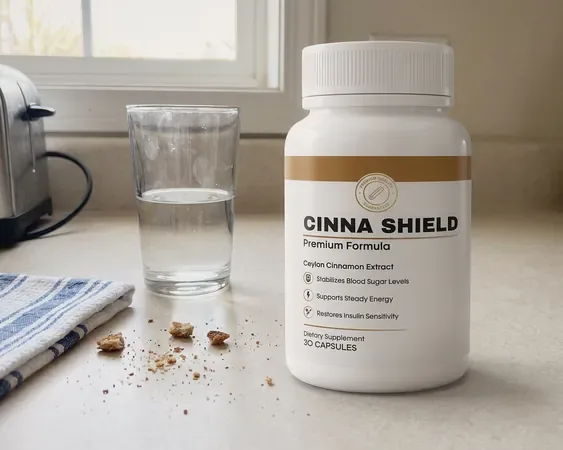
Everything people want from cinnamon water — the right cinnamon, every day, as part of a calm routine — is easier to get from a well-made capsule.
One small capsule next to breakfast gives you a measured amount of Ceylon, with no simmering, no grit and no guessing. You can still keep the warm mug of water if you love the ritual — just let the capsule do the cinnamon part.
The key is choosing the right capsule: Ceylon only, a real amount and proof of the species (see how to choose the best Ceylon cinnamon capsules). We explain the oil base in Ceylon cinnamon with MCT oil, and how much makes sense in how much Ceylon cinnamon per day.
Our recommendation: CinnaShield
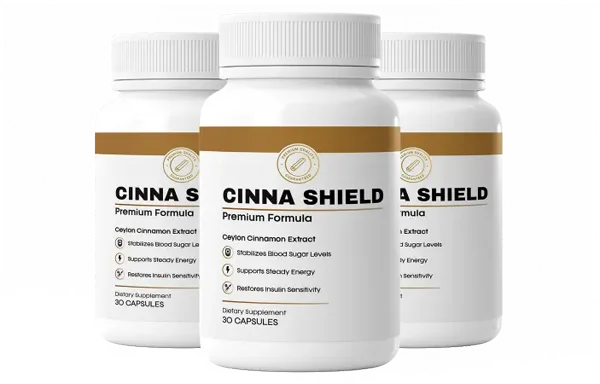
If you like the idea behind cinnamon water but not the daily kitchen routine, CinnaShield is the option we recommend. It solves every weak spot of the homemade version:
- The right cinnamon, proven. DNA-verified Cinnamomum verum from Sri Lanka — no Cassia, no guessing what is in the jar.
- A known, real amount. A 12:1 extract: one capsule equals 7,200 mg of Ceylon bark, carried in MCT oil. The same every day.
- Zero prep. One capsule a day with a glass of water next to a meal, for healthy blood sugar levels, steady energy and insulin sensitivity*.
- Made right. Produced in an FDA-registered, GMP-certified facility, GMO-free.
- Risk-free. From $33 a bottle on the 3-bottle kit, free shipping and a 90-day money-back guarantee — even on empty bottles.
Frequently asked questions
Does cinnamon water help with blood sugar?
Cinnamon has been researched for its role in healthy blood sugar support, and USDA scientists isolated water-soluble polyphenols from cinnamon bark that showed insulin-like activity in lab assays, which is part of why the drink caught on. A glass of cinnamon water is also a warm, sugar-free way to replace soda or sweet coffee. What it cannot give you is a known, consistent amount of cinnamon from one day to the next, and it is not a substitute for any medication. If you want a measured daily amount of Ceylon cinnamon, a concentrated extract such as CinnaShield is the simpler way.
How do you make cinnamon water?
Bring one to two cups of water to a boil, add one Ceylon cinnamon stick, then let it simmer gently or steep off the heat for about 10 to 15 minutes. Remove the stick, let the water cool to a comfortable temperature and drink it warm. Popular additions are a squeeze of lemon, a few slices of fresh ginger or a small splash of apple cider vinegar. Honey is also common, but it adds sugar.
Should I use Ceylon or regular cinnamon for cinnamon water?
Ceylon. Most cinnamon sold in North America is Cassia, which contains much more coumarin than Ceylon, and Germany's Federal Institute for Risk Assessment advises people who use cinnamon regularly to choose Ceylon. If you plan to drink cinnamon water every day, look for sticks labeled Ceylon or Cinnamomum verum.
When is the best time to drink cinnamon water?
Most people drink it in the morning as part of a wake-up routine, or alongside a meal. There is no official best time. What matters more is the cinnamon itself (Ceylon rather than Cassia) and doing it consistently, which is exactly the part most people find hard to keep up.
Is it safe to drink cinnamon water every day?
Made with Ceylon cinnamon and no added sugar, cinnamon water is a simple drink most people enjoy. Made every day with supermarket Cassia, it adds to your coumarin intake, which European regulators limit to a tolerable daily intake of 0.1 mg per kilogram of body weight. Talk to your doctor before making cinnamon a daily habit if you are pregnant or nursing, take medication (especially for blood sugar) or have a medical condition.
What is an easier alternative to cinnamon water?
A once-a-day Ceylon cinnamon capsule. CinnaShield is a 12:1 extract of DNA-verified Ceylon cinnamon, equal to 7,200 mg of raw bark in one capsule, with no Cassia. You take it with a glass of water next to a meal: no simmering, no straining and no guessing how much cinnamon ended up in the mug. It is made to support healthy blood sugar levels, steady energy and insulin sensitivity*.
The bottom line
Cinnamon water earns its popularity: it is warm, hydrating, sugar-free and a better habit than a sweet drink. But as a way to get cinnamon every day, it is laborious and inconsistent — usually the wrong species, an unknown amount and a recipe that has to be rebuilt every morning. Keep the mug if you enjoy it. For the cinnamon itself, choose Ceylon, in a measured amount, in one simple step. Weighing other options? See berberine vs Ceylon cinnamon, or start at the CinnaShield Health home page.
This article is general information, not medical advice. *Supplement statements have not been evaluated by the FDA. Talk to your doctor before starting any supplement, especially if you are pregnant or nursing, take medication (including any medication for blood sugar) or have a medical condition. Sources: U.S. Department of Agriculture, Agricultural Research Service (Anderson et al., water-soluble cinnamon polyphenol polymers with insulin-like activity, Journal of Agricultural and Food Chemistry, 2004); National Center for Complementary and Integrative Health (cinnamon fact sheet); European Food Safety Authority (coumarin TDI, 2004); German Federal Institute for Risk Assessment (BfR) consumer advice on cinnamon and coumarin.